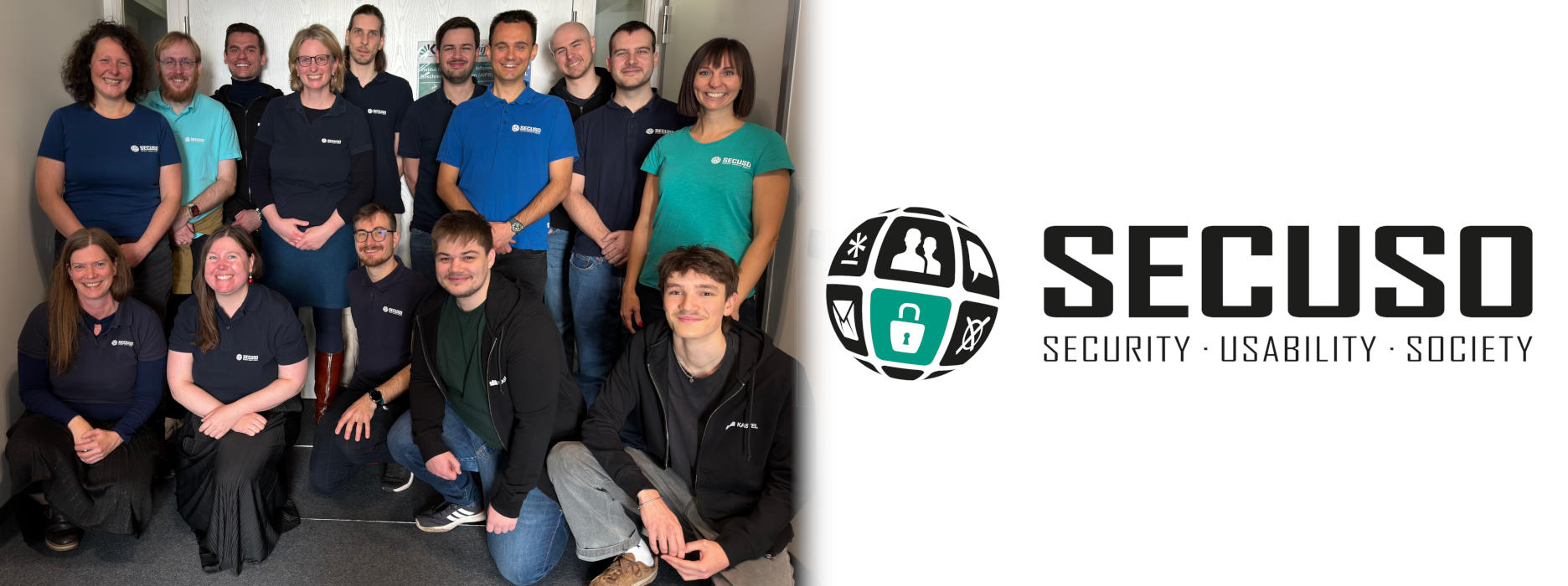
The research group SECUSO (Security • Usability • Society) belongs to the Institute of Applied Informatics and Formal Description Methods (AIFB) of the Karlsruhe Institute of Technology (KIT). The group was founded in 2011 by Prof. Dr. Melanie Volkamer at the TU Darmstadt. SECUSO moved to the Karlsruhe Institute of Technology at the beginning of 2018. SECUSO is a member of Kastel, K-CIST and KD²Lab.
The paper „Accidentally Simulating Manipulation during Real Election - but hardly anyone cares?“ By Melanie Volkamer, Florian Moser and Tobias Hilt was awarded with the distinguished paper award in the practitioners track at this years E-Vote ID 2026. The paper is part of a series of publications which describe the implementation of individual verifiability in the GI election.
About the conferenceOn 21 October 2026, the Modulcafé for first-semester Master's students of the Faculty of Economics will take place as part of the MO-Days of the winter semester 2026/27. From 2:00 to 4:00 pm, students can gain insight into the institutes and their modules and engage in direct exchange with researchers in a relaxed atmosphere. SECUSO will also be there with a booth: We will present our courses and look forward to personal conversations with the new students. Come by and visit us!
SECUSO teachingThe paper “SoK: The Past Decade of User Deception in Emails and Today’s Email Clients’ Susceptibility to Phishing Techniques” by Maxime Fabian Veit, Oliver Wiese, Fabian Lucas Ballreich, Melanie Volkamer, Douglas Engels, and Peter Mayer has surpassed the 500-download mark. The paper examines how email programs respond to the techniques developed over the past decade to deceive users. The paper was also cited in a report on phishing protection by the Federal Office for Information Security (BSI).
Read the paperWe welcome Mario Gemov and Daniyal Malik as new student assistants at SECUSO! Mario has a bachelor’s degree in computer science and has already written his thesis at SECUSO. He is assisting Fabian Ballreich with research activities. Daniyal also has a bachelor’s degree in computer science and is assisting SECUSO with programming tasks. Welcome to the team - we’re glad to have your support.
The team